Case Study
Chat Routing Improvements
When members stepped away from a live chat, they came back to a stranger. I redesigned the routing experience — and the queue logic behind it — so members could hold their place with the advocate who already knew their case.
Background
Three tiers of support, one chat window
Included Health provides virtual healthcare access, answers, and advocacy through a modern experience designed to treat people better. Members get their healthcare questions answered through our messaging platform, where three groups share the same thread:
- AI Assistant — our LLM-driven first line of support, answering questions and directing members to the right humans.
- Member Care Advocates (MCA) — a synchronous chat team handling billing and claims, coverage, and technical issues.
- Virtual Care Support (VCS) — an asynchronous team of nurses handling clinical requests like prescription refills, excuse notes, and referrals.
Problem
Stepping away meant starting over
When members stepped away from a live chat, MCAs would close the thread after several minutes. When members navigated back, they were often connected to a different MCA — one with no context on what had already been discussed.
That single behavior pushed both of our key metrics the wrong way:
- Average handle time increased — as new MCAs oriented themselves to the context of the chat, handle time went up.
- Chat MSAT decreased — members felt bounced around and frustrated by a fragmented experience as they moved among different MCAs, decreasing their trust.
Metrics Goals
What we set out to move
Cut the share of chats that get handed between advocates.
Recover the time spent re-reading context on a transferred chat.
Designing Solutions
Mapping the member flow
Before touching a screen, I mapped every path a member could take out of a timed-out thread — dismissing the modal, waiting for their original advocate, or routing to whoever was free. The branching is where the real design problem lived.
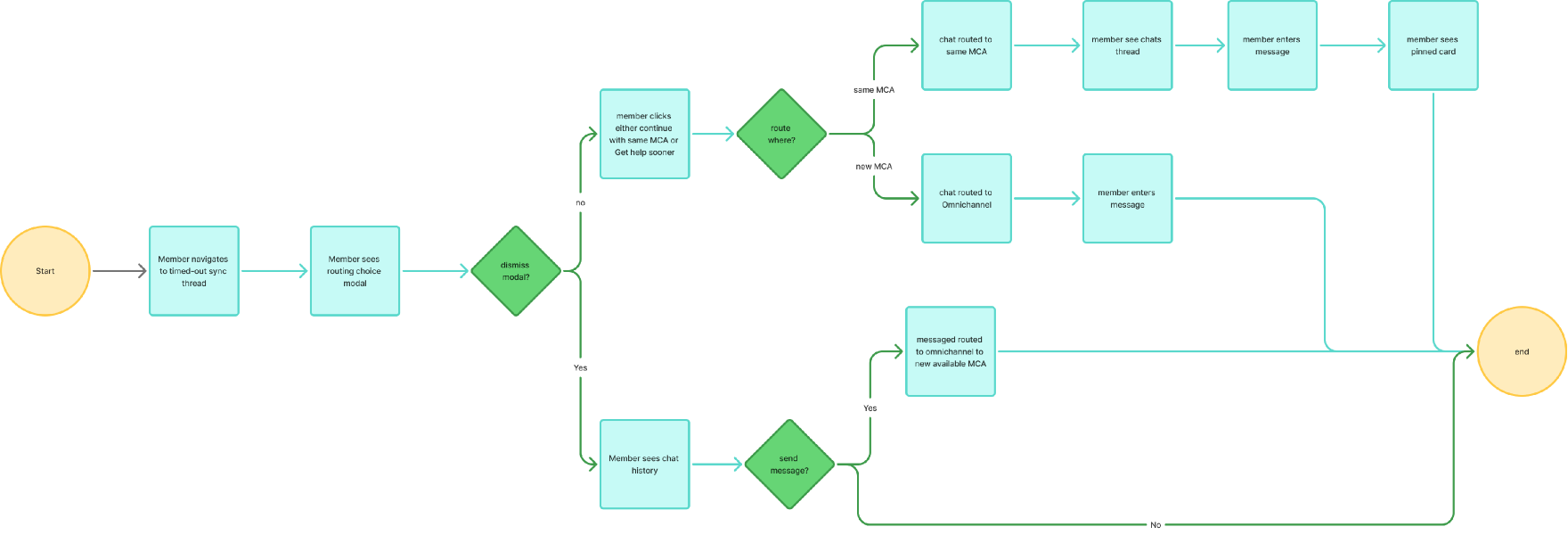
Member flow — routing choice, wait, and re-entry paths
Designing Solutions
The design was mostly writing
Two rounds of mocks, and the substantive change between them was language, not layout. V.1 explained what had happened to the member. V.2 asked them what they wanted — and moved the wait time from a warning into a commitment.
Welcome back!
Since you stepped away, Allison R. started helping other members, so there may be a wait before they return to your case.
Welcome back!
Would you like to keep chatting with the same advocate? They’re helping other members right now.
Both versions carried the same escape hatch — “If you need help sooner, you can chat with a different Care Team member. They’ll see all your chat history.” — because testing showed the assurance of carried-over context mattered as much as the wait itself.
Usability Testing
Validating the routing choice
The goal was to increase transparency around the path of a request and reduce the feeling of being “bounced around” among multiple MCAs. The open question: what type of context do members need to feel secure that their issue will be handled?
- Approach — 30-minute moderated interviews
- Platform — Google Meet with the Hey Marvin AI assistant
- Participants — 4 internal team members
Research Findings
Three things members needed
- Wait time transparency — for complex issues, members wanted to stick with the same advocate, since that person had context on their problem. Including a definitive max wait time, even a long one, made them more confident their issue would be addressed. Its absence pushed them to route to a new advocate.
- Personalization — members felt reassured by the advocate’s name, especially on higher-complexity issues.
- Importance of context — members responded positively to the assurance that a new advocate would have all their prior chat history.
We need to work with routing logic to find a way to provide more time transparency to members.
Designing Solutions
Rebuilding the queue behind it
A max wait time is a promise, and the backend had to be able to keep it. Working closely with engineering, we restructured the queue so a member could hold a place with a specific advocate rather than being dropped into general routing.
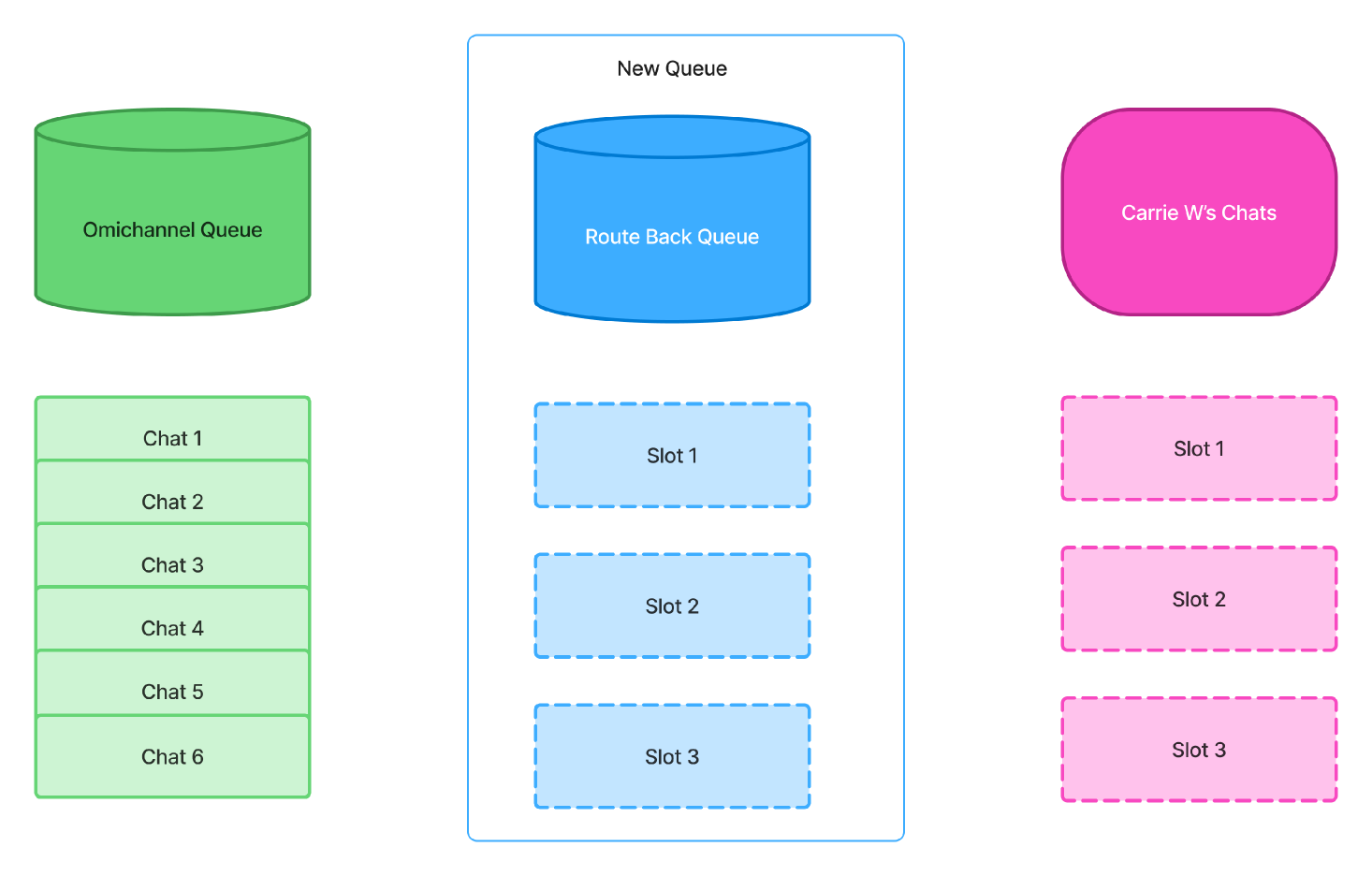
Backend queue structure
Designing Solutions
The advocate’s side
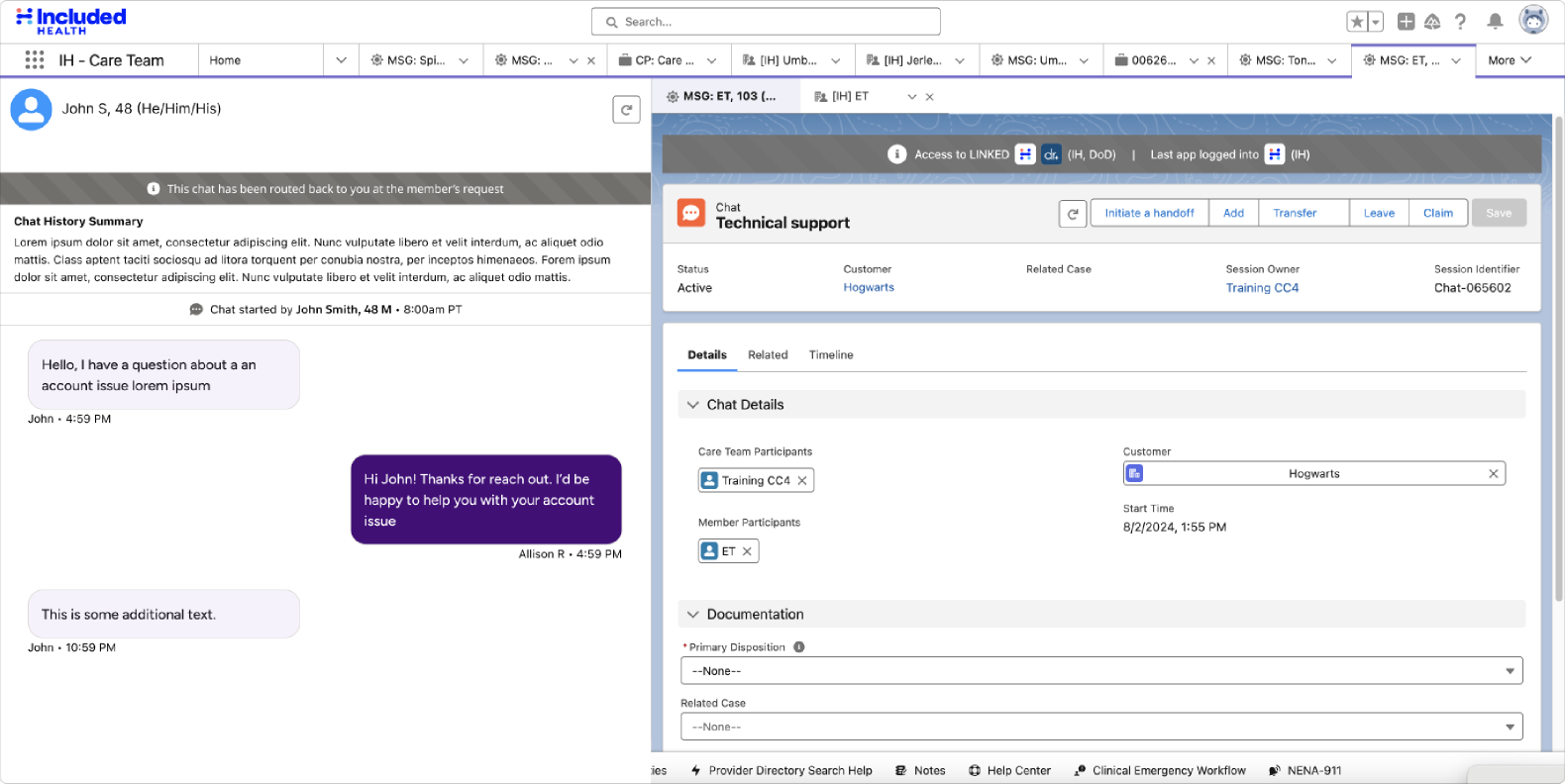
Routing a member back to the same advocate only works if that advocate can pick the thread up cleanly. The Care Team view surfaces a chat history summary and flags when a chat has been routed back at the member’s request.
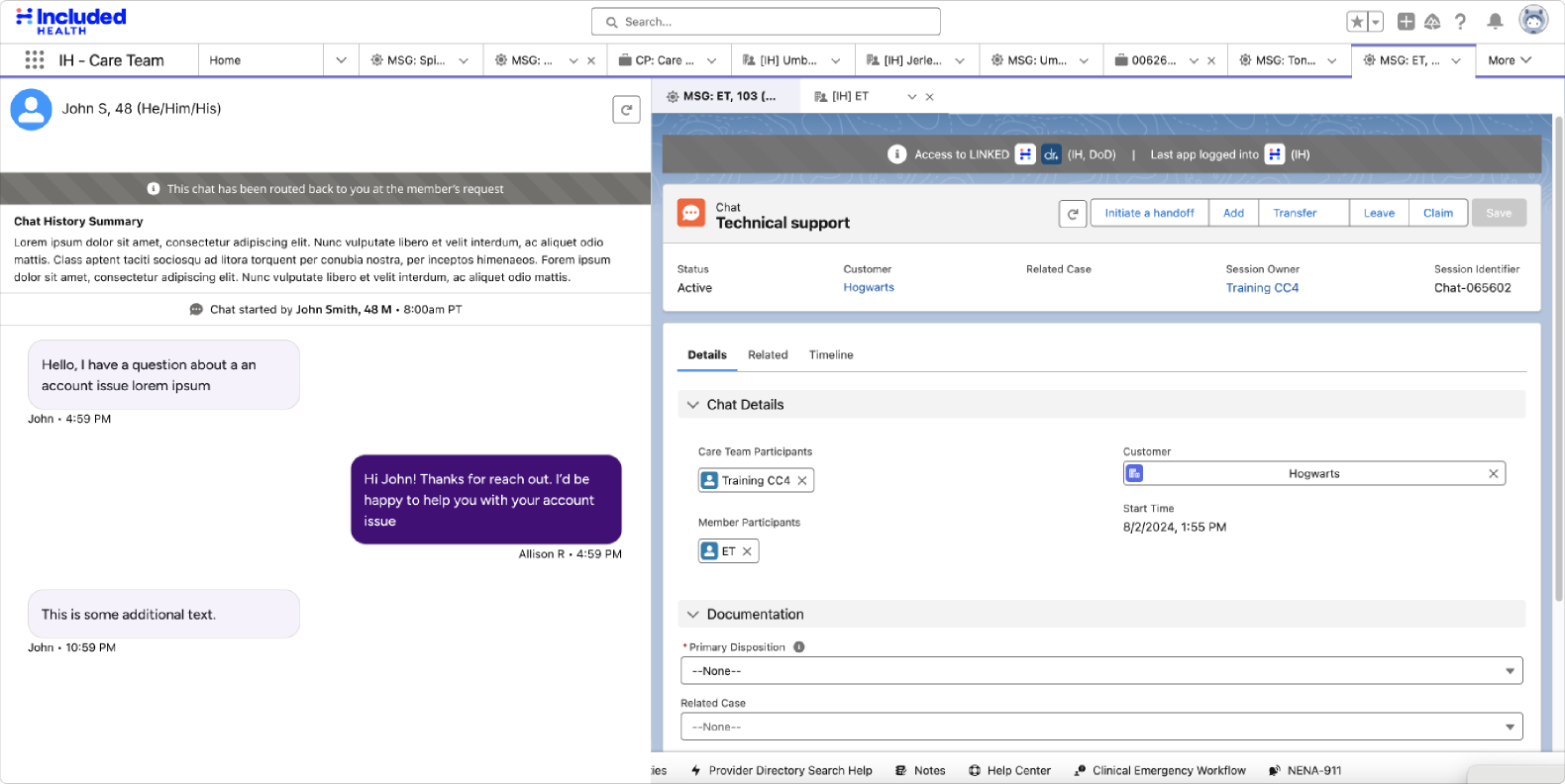
Care Team view — routed-back notice and chat history summary
Final Member Designs
What shipped

Final member experience
Outcomes
Where it landed
Short of the 20% target, but a 20-point drop against baseline.
Beat the −1 minute goal.
Takeaways & next steps
- There was a lot of complexity around routing, and working closely with engineering to understand it was key to solutioning.
- Usability testing had real impact in advancing the importance of time transparency — the finding that a long-but-definite wait beat an unknown one changed the design.
- It would be valuable to zoom out and dive deeper into the MCA workflows to drive even more efficiency.